Noora Ghodrati
Noora Ghodrati is a London-based Iranian graphic designer with a strong interest
in photography. Her practice explores the visual language of Iranian patterns and
architecture, often reinterpreting traditional motifs through contemporary design.
Colour and pattern play a central role in her work, where she investigates
combinations that reflect both cultural heritage and modern aesthetics.
Alongside her exploration of materials, she experiments with pottery, fabrics, and
different types of paper, as well as a range of printing techniques. Within her
design practice, she aims to maintain a minimal approach, focusing on clarity,
simplicity, and ease of understanding, ensuring that her visual compositions remain
accessible and easy to follow.
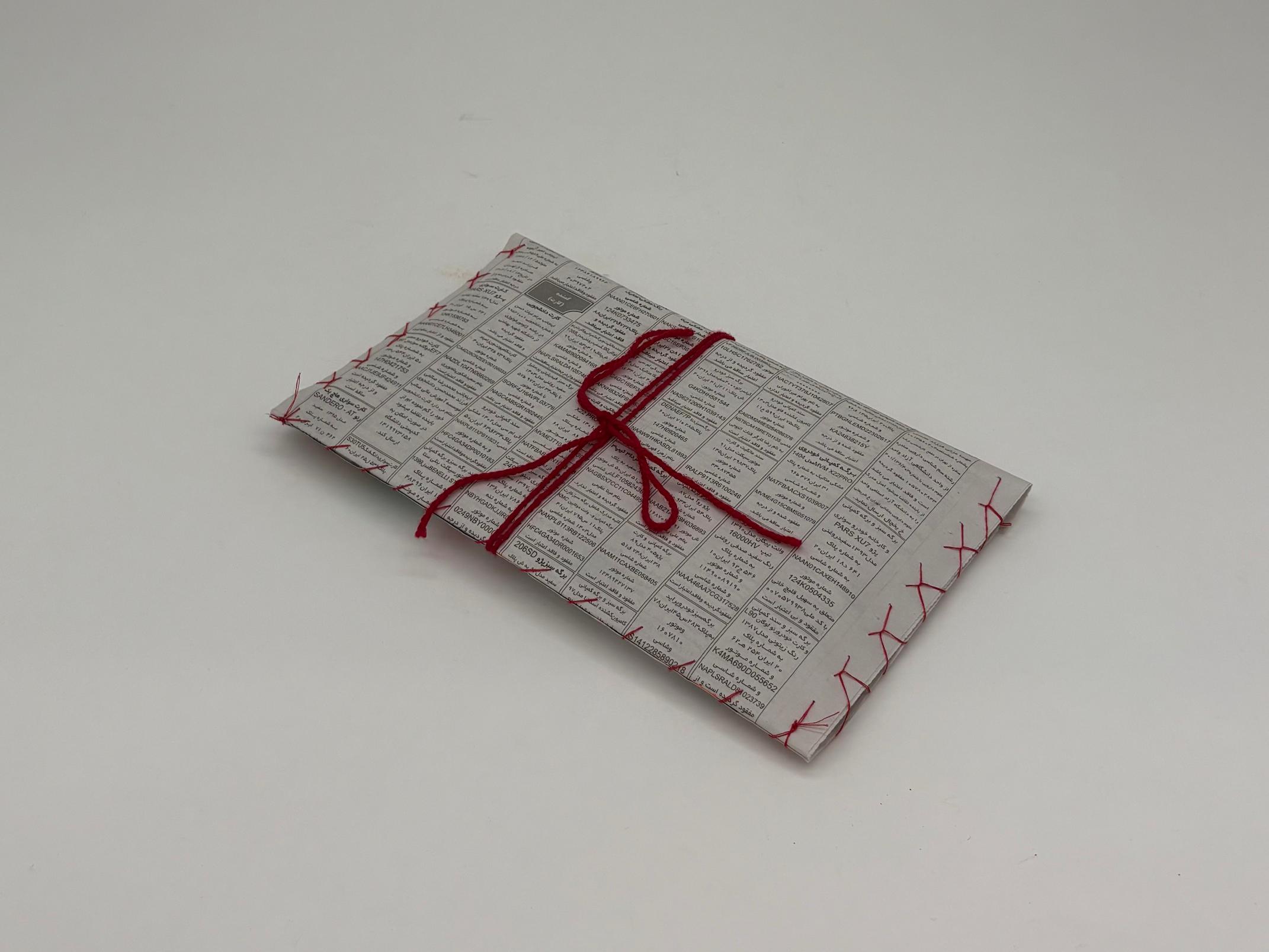
Raaze Persia – Raaze Persia is a gift-like project that introduces Iran and Iranian culture through a
contemporary visual narrative rooted in traditional Persian patterns and characters.
It combines these elements with photographic documentation of Tehran today,
offering a closer look at the city’s identity. The project explores changes in
fashion and social expression before and after the Iranian Revolution, supported
by an interview with Noora’s grandmother, providing a personal account of how
everyday dress has evolved over time. A video component captures the
atmosphere of Tehran’s streets, aiming to present everyday life and a more
complete image of Iran and its people

Golestan Palce – This project explores how storytelling changes between physical art and digital media through the context of Iranian cultural identity and heritage. Inspired by Golestan Palace, the work combines ceramics, photography, typography, scanned materials, and digital design to investigate themes of memory, fragmentation, resilience, and preservation. Blending physical making with digital processes, the project reflects on how cultural stories are communicated, experienced, and remembered across time.
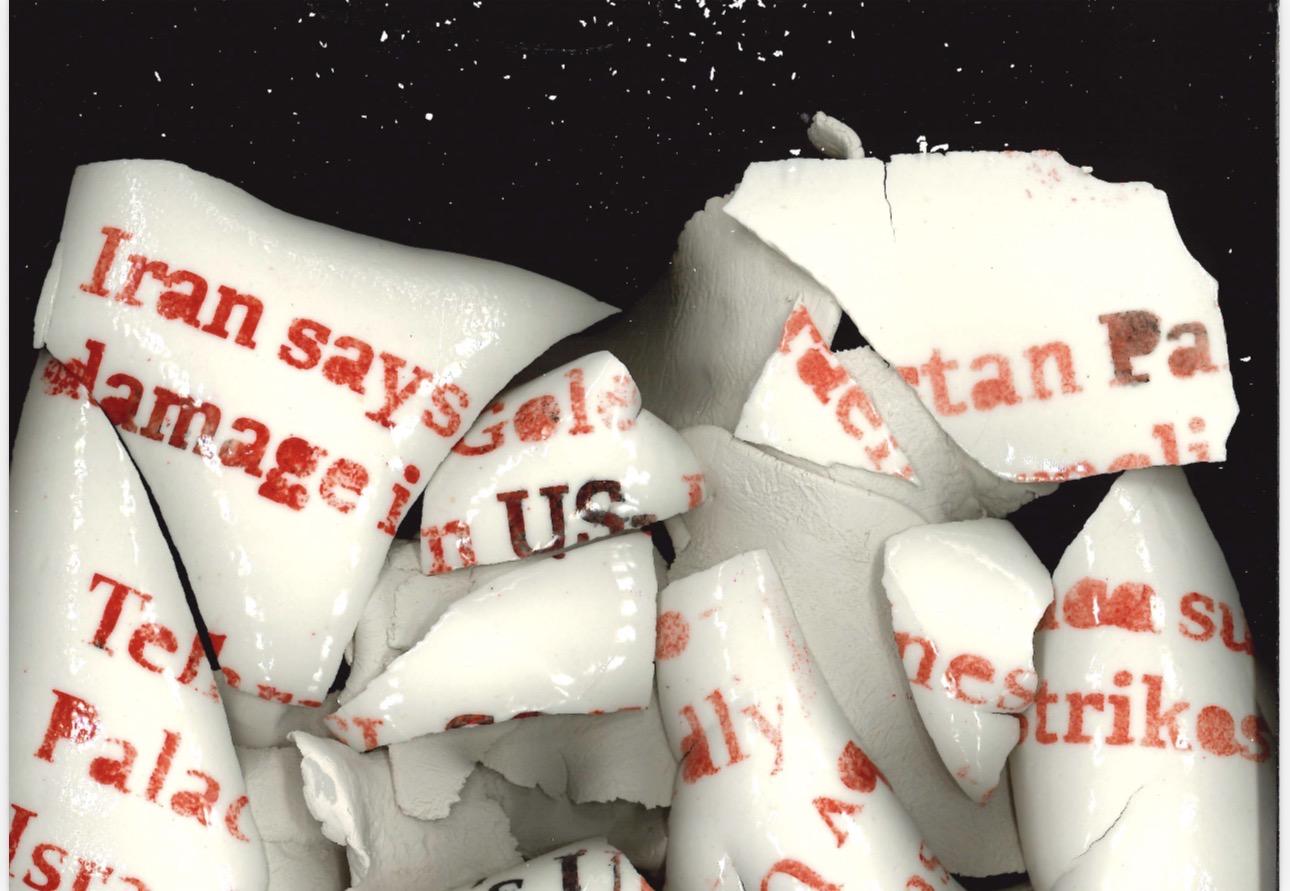
Golestan Palce – This poster is made from broken clay pieces combined with scanned materials and digital composition. The texts are taken from recent news reports, turning temporary digital information into a physical form. The work explores damage, memory, and how cultural stories shift between physical and digital media.