Trudy Siaw Coffie
Trudy Siaw Coffie is a third-year undergraduate Interior Architecture student with a strong interest in sustainable design, adaptive reuse, and the transformation of existing buildings into socially engaging spaces. Her work is driven by the belief that architecture should preserve and celebrate the character of existing structures while responding to contemporary environmental and community needs.
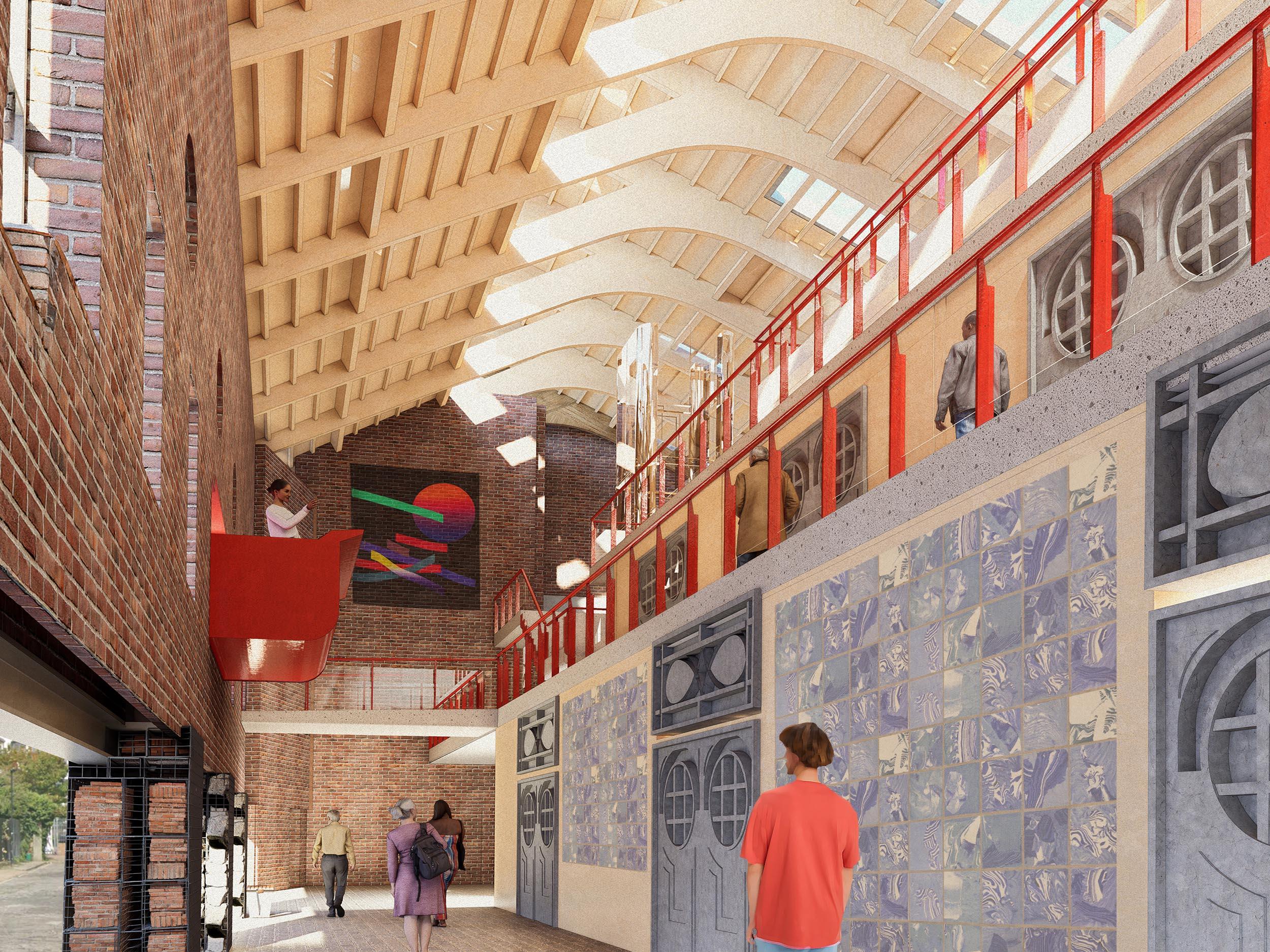
For her Final Major Project, Coffie explores the adaptive reuse of the former Palace Cinema, reimagining the historic building as a multifunctional space that supports creativity, collaboration, and community engagement. The proposal transforms the building into a makers hub during the day and a spoken word café in the evening, creating a flexible environment that evolves throughout the day while maximising the use of existing space and resources.
The project investigates how contrasting programmes can coexist within one building and operate successfully at different times. During daytime hours, the makers hub provides a range of creative spaces including pottery studios, woodwork and metal workshops, sewing and textile areas, alongside shared making spaces designed to encourage collaboration between emerging creatives. These spaces aim to provide affordable opportunities for learning, experimentation, and skill development while fostering a sense of community among users.
As the day transitions into evening, the building shifts into a spoken word café, offering a platform for performance, conversation, and cultural expression. This dual-purpose approach explores flexibility within interior architecture and demonstrates how buildings can support multiple communities.
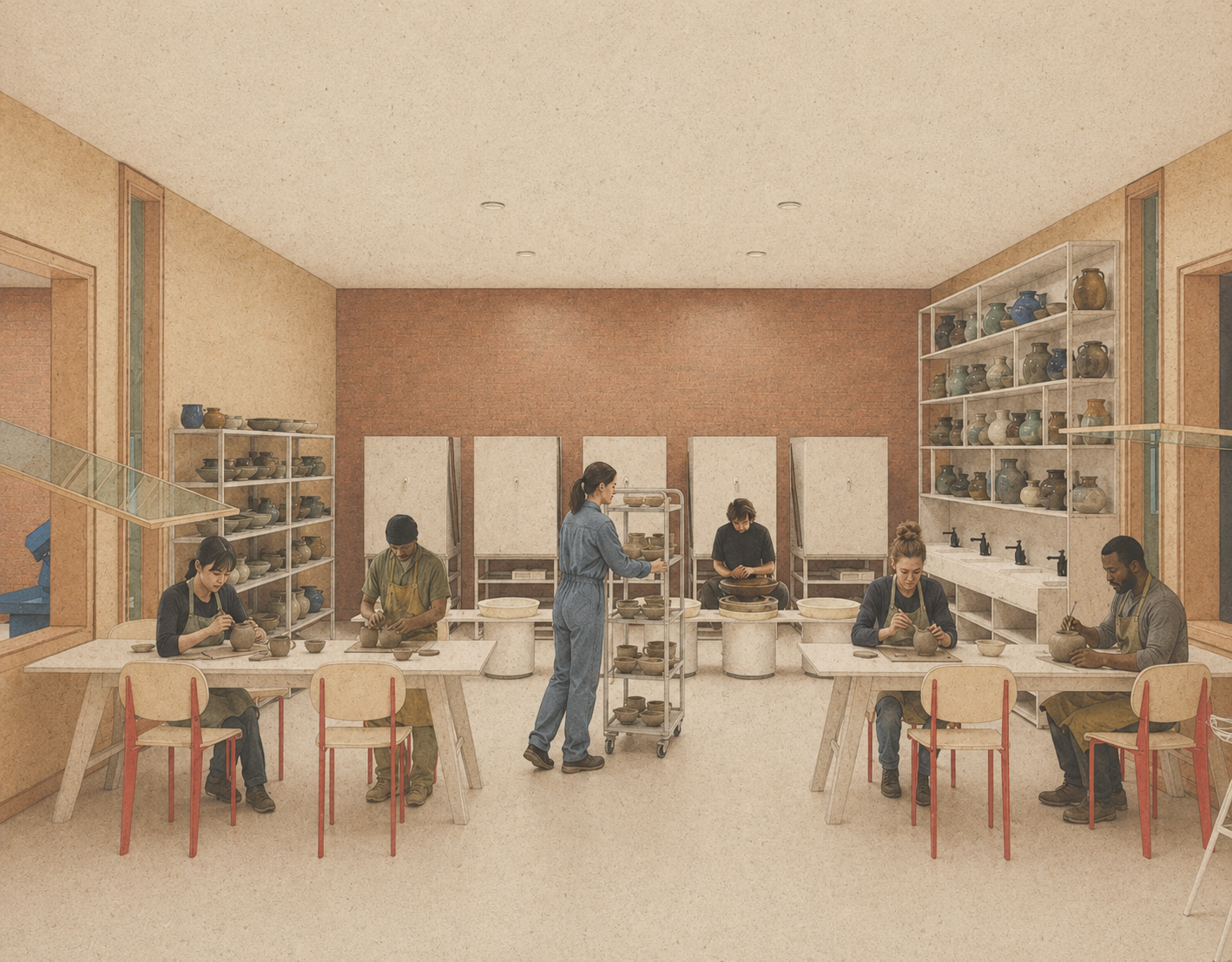
This image illustrates the pottery studio located on the ground floor, featuring connecting windows on either side of the space that provide visual and physical links to adjacent studios. These openings encourage interaction between different creative practices, offering views into workshops where activities such as woodworking and metalworking take place. The design promotes collaboration, transparency, and a shared sense of making across the building.
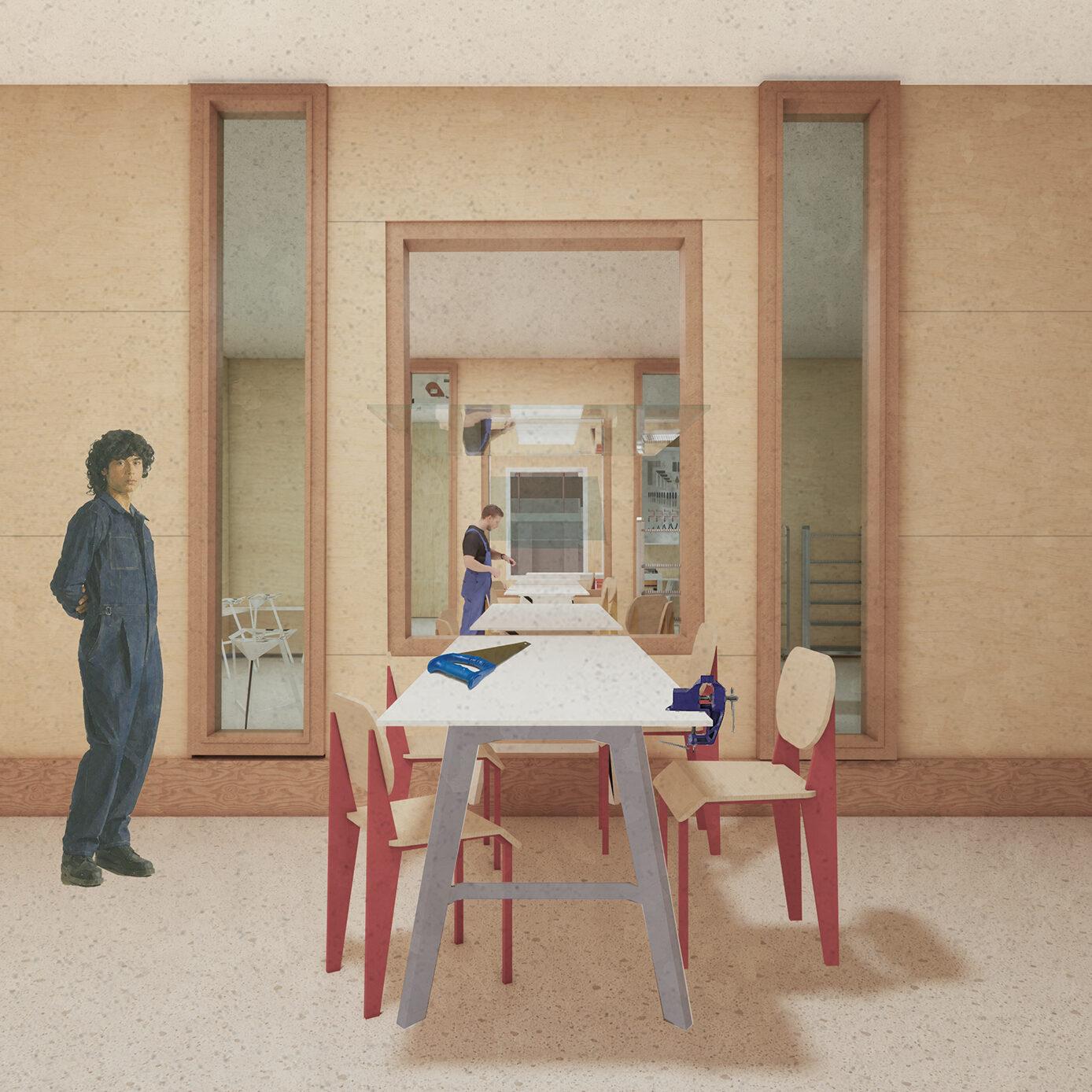
A render of the window view in the workshop – This image highlights the interconnected windows between the ground floor workshops, designed to enhance visibility and encourage collaboration across different creative disciplines. The openings allow users to observe activities taking place in neighbouring spaces, promoting knowledge sharing, inspiration, and a stronger sense of community within the makers hub. By visually linking the workshops, the design creates an open and collaborative environment while supporting multiple forms of making within one shared space.
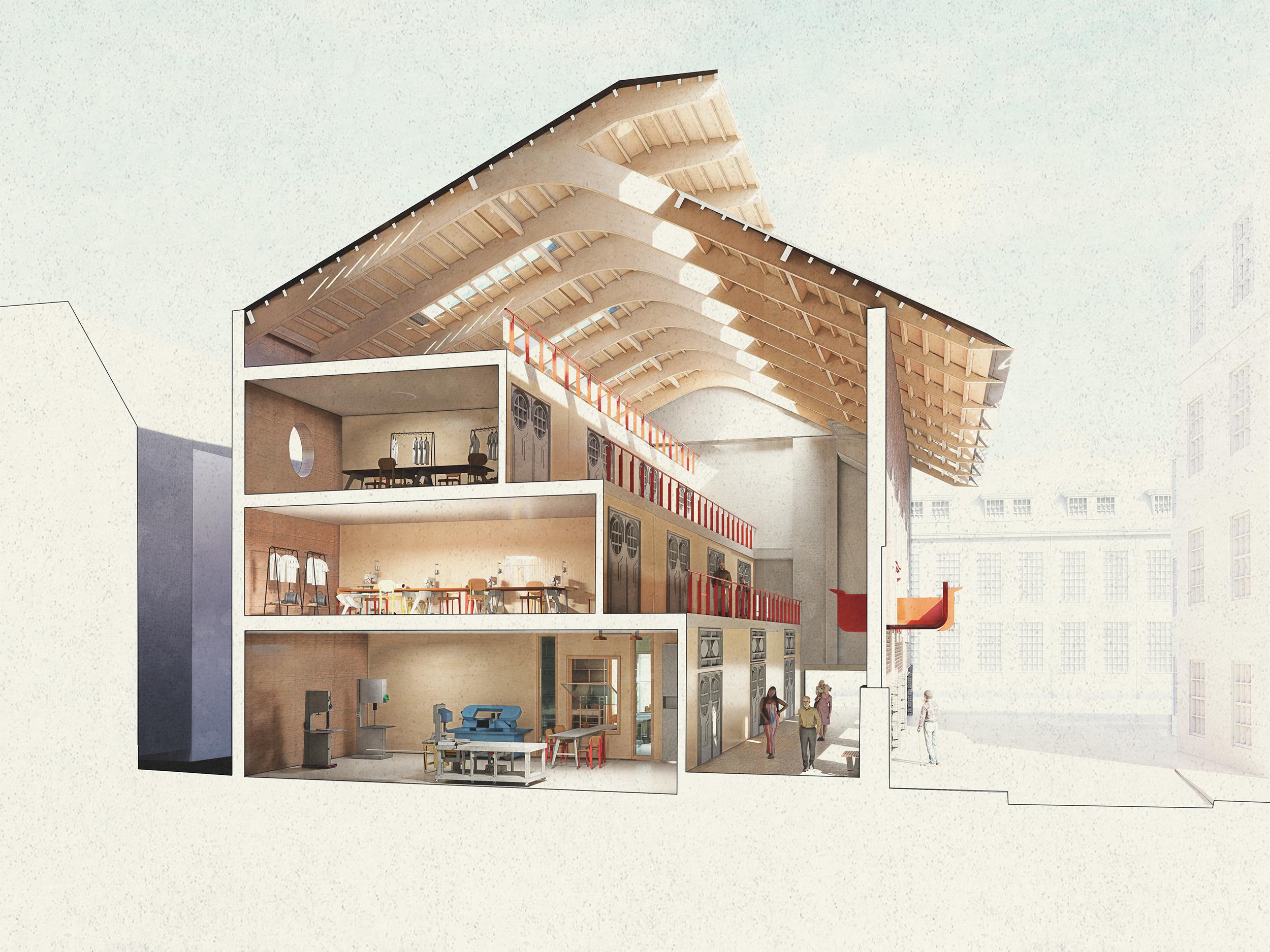
Sectional perspective view – This image shows Coffie's proposal for the former palace cinema. A makers hub by day and a spoken word venue by night. A new glulam roof structure has been introduced whilst keeping the existing facades of the building. The stepped arrangement of each floor references the tiered seating layout traditionally found in cinemas, creating visual connections between spaces and reinforcing the building’s former identity. Red balustrades and interior elements pay homage to the cinema’s heritage, recalling the rich tones often associated with historic theatres while contrasting against the warm timber structure and reused materials.
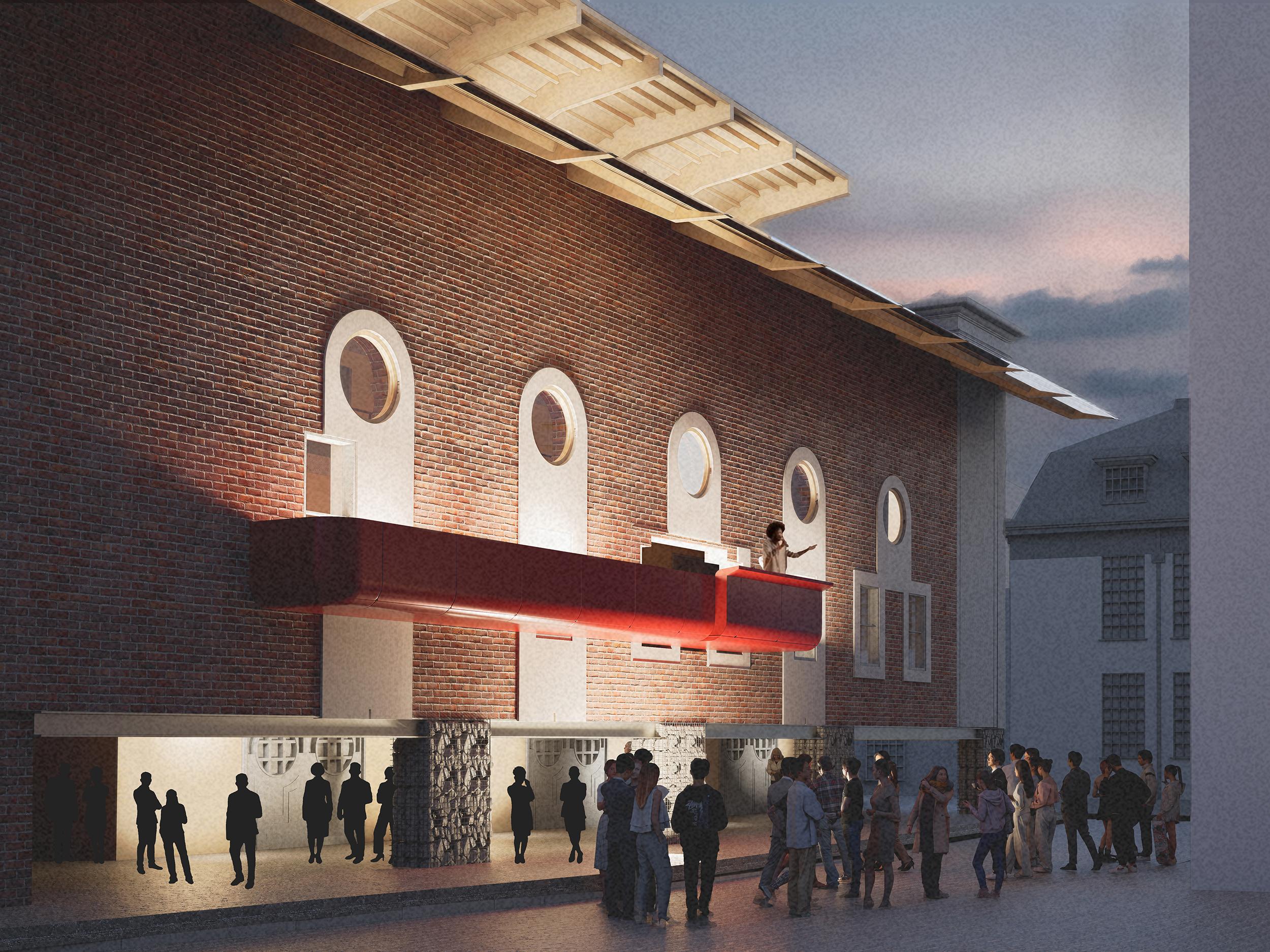
A deep section showing the spoken word taking place – The balcony onto Grafton Yard acts as a stage for the community to perform spoken word to the collected community below. The flashes of red create a subtle physical identity for the building.
1;1000 site map of Kentish Town – From the left, the public are encouraged into the building, by the use of cobblestones, which bleed from the outside to within. The public street extends through the building, and the rooms then become a series of shop-fronts.