Cherie Khue Anh Ho
Cherie Khue Anh Ho is a Part 1 BA (Hons) Interior Design Environment Architectures graduate, born and raised in Vietnam. Throughout her degree, she has explored adaptive reuse as a means of cultural continuity, environmental responsibility, and social regeneration. Her work investigates how existing buildings can be reimagined through narratives of material reuse, retrofit, and more-than-human coexistence, often challenging dominant notions of efficiency and immediacy within contemporary building practices through alternative spatial perspectives.
Grounded in both conceptual storytelling and technical investigation, her design methodology draws from architecture, art, fashion, craftsmanship, and vernacular practices to construct layered spatial narratives rooted in place, memory, and community. Influenced by her Eastern roots and heritage, her projects merge inherited cultural histories with spatial governance and contemporary environmental concerns, examining how architecture can mediate the relationship between people, ecology, and the built environment.
Her Final Major Project particularly explores non-anthropocentric dialogue and material ecologies. She believes architecture can operate as an evolving framework rather than a fixed end product. Through atmospheric storytelling and adaptive interventions, she aims to create spaces that foster coexistence, participation, and renewed relationships between built environments and their inhabitants.
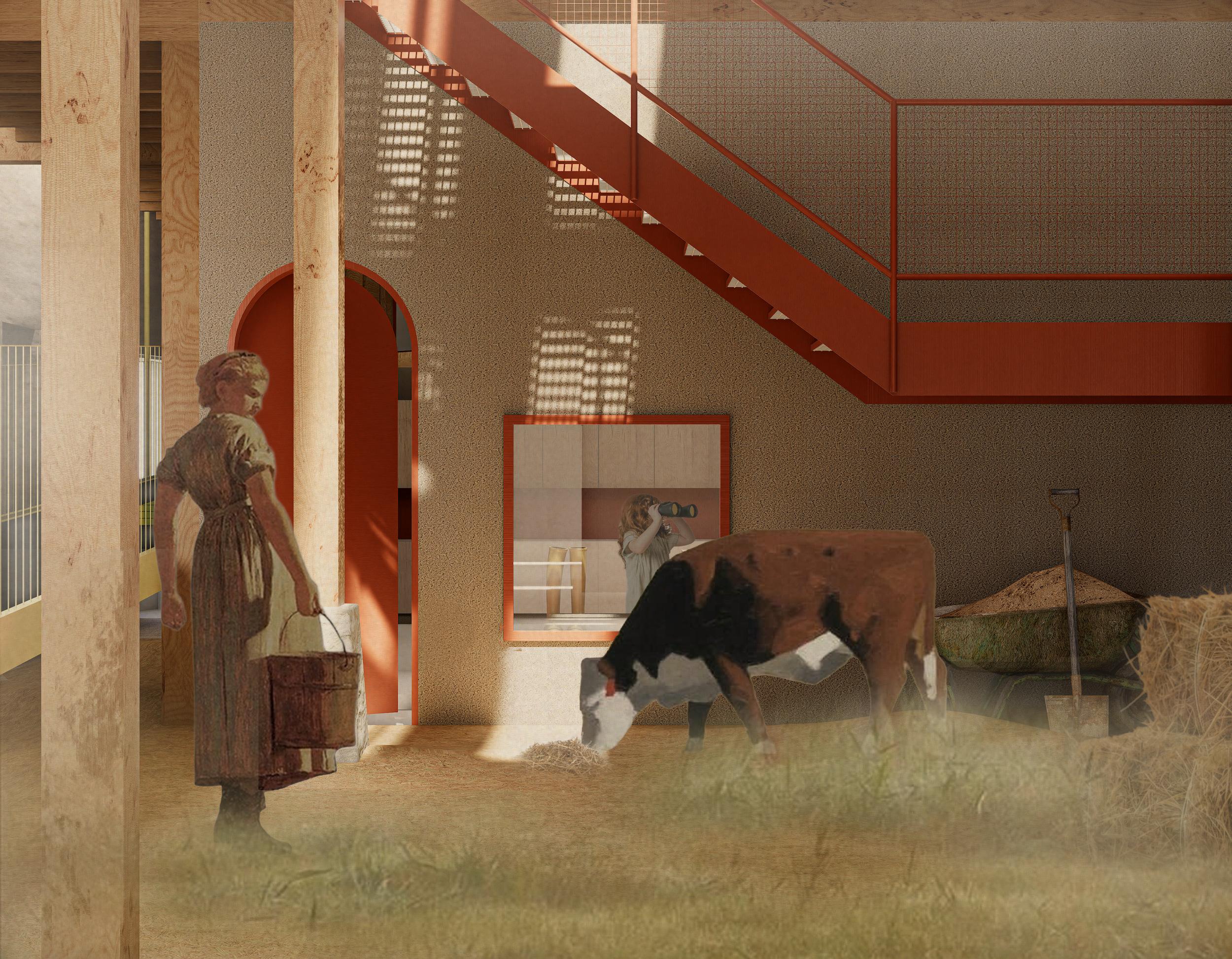
Co-existence Infrastructure, Interior Perspective

1:100 Proposal Plan – What once stood as the Palace Cinema has lapsed into a period of programmatic stagnation, a dead space too outdated to restore, too vexing to demolish. The design repurposes its cinematic voids into clusters of intercultural exchange. Prominently sited, the building reawakens as a vessel for collective encounter and spatial renewal, serving the people and animals of Kentish Town.
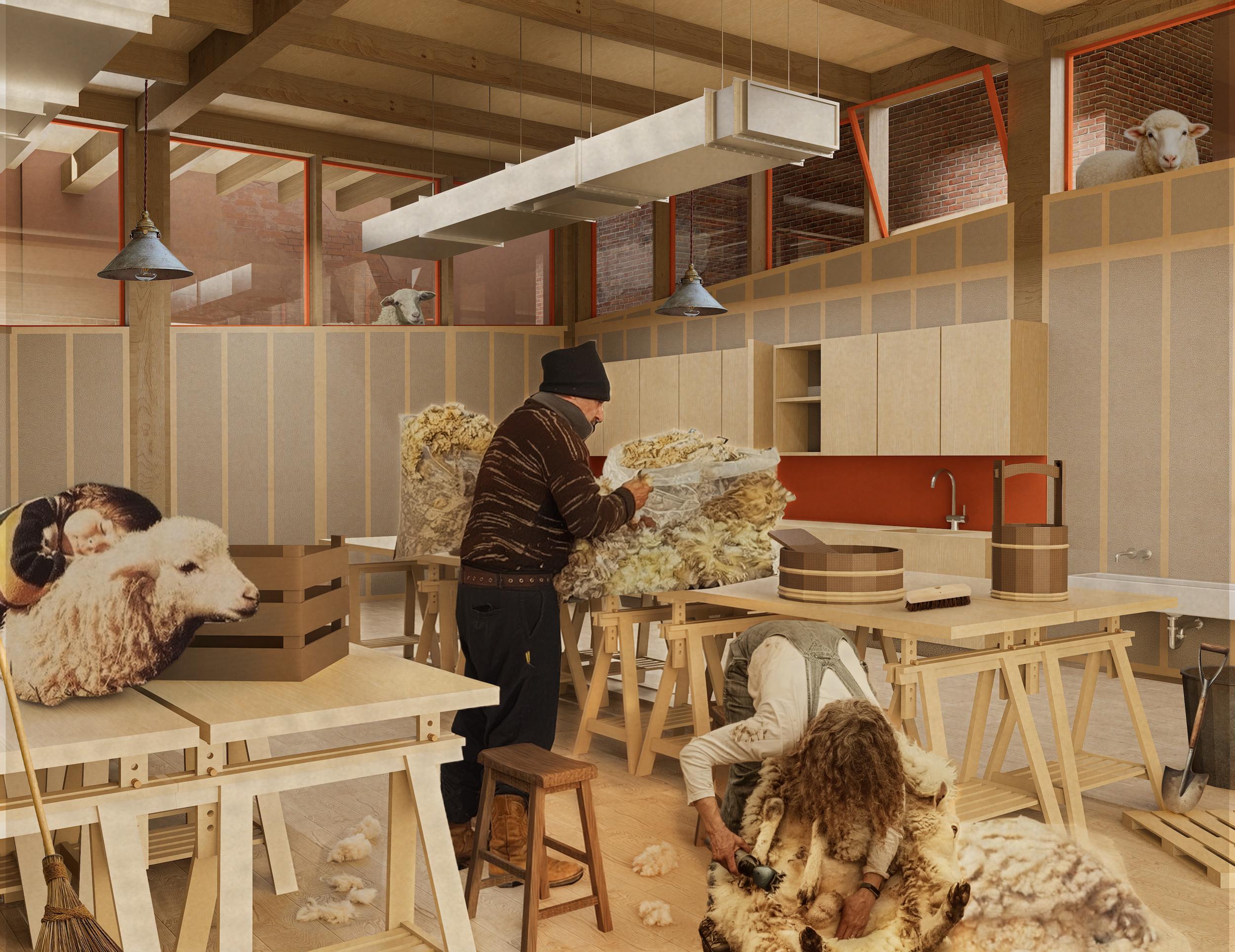
Shearing Workshop – Materials are not seen as mere passive surfaces, building elements function as environmental mediators. Hempcrete walls are living interfaces that become insulation, acoustic buffer, air filtration and humidity regulator in order to enable sustainable coexistence between humans and non-human species within shared environments
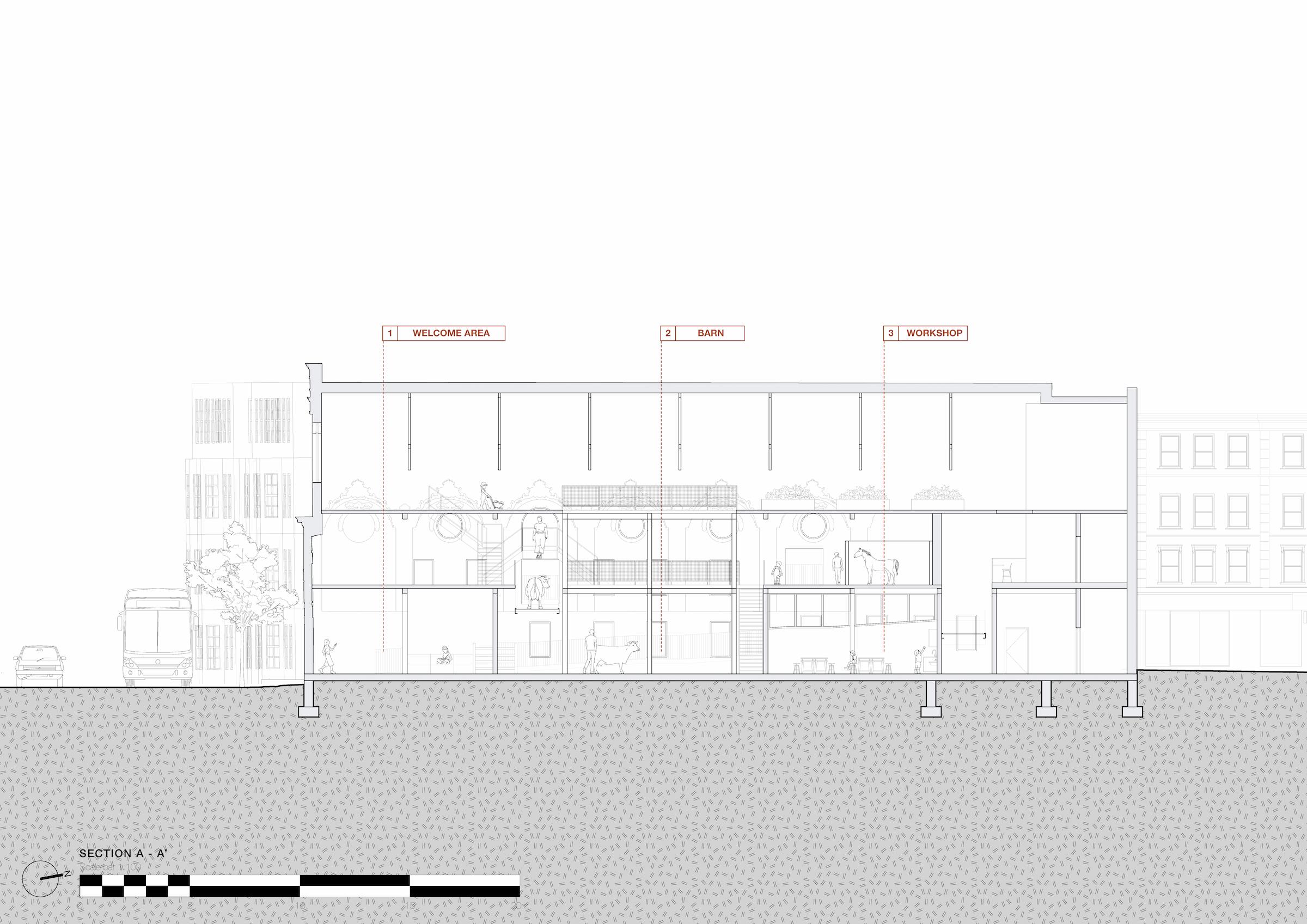
Proposed Long Section
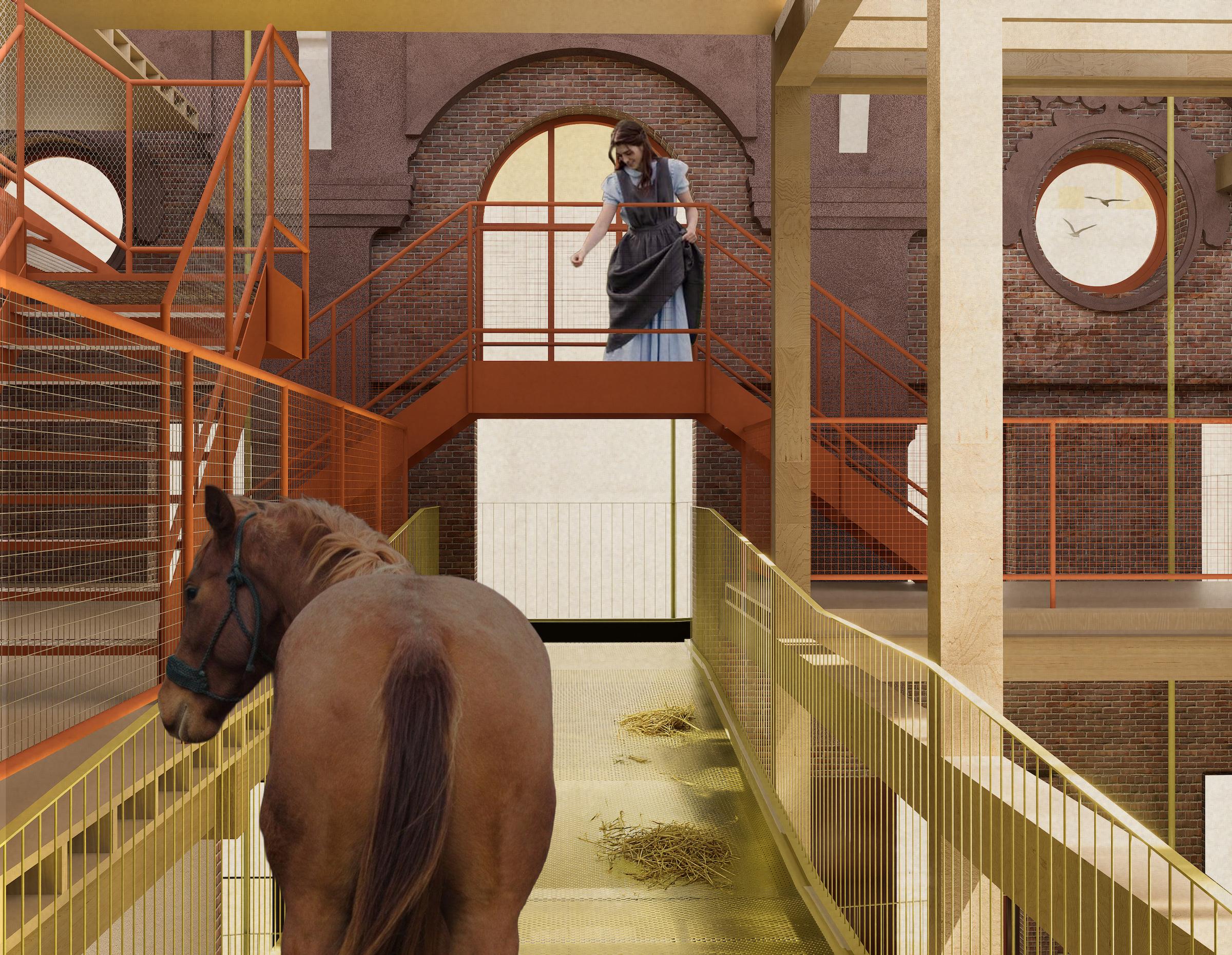
Overlapping Territories – Animals do not move randomly or just because space is connected, they move in response to resources, sensory cues and comfort. A continuous ramp network wraps around and through the building. The ramp system creates a vertical landscape that provides guidance towards livestock’s movement, enabling them to roam freely across varied elevations. By emulating grazing routes, the ramps restore natural and instinctive grazing behaviors of animals despite the urban setting. The scheme is intentionally tailored and calibrated to a specific target group which in this case, are farm animals with similar movement traits and behavioral characteristics such as cattle, goats, pigs and horses, while also remaining accessible and navigable for humans.